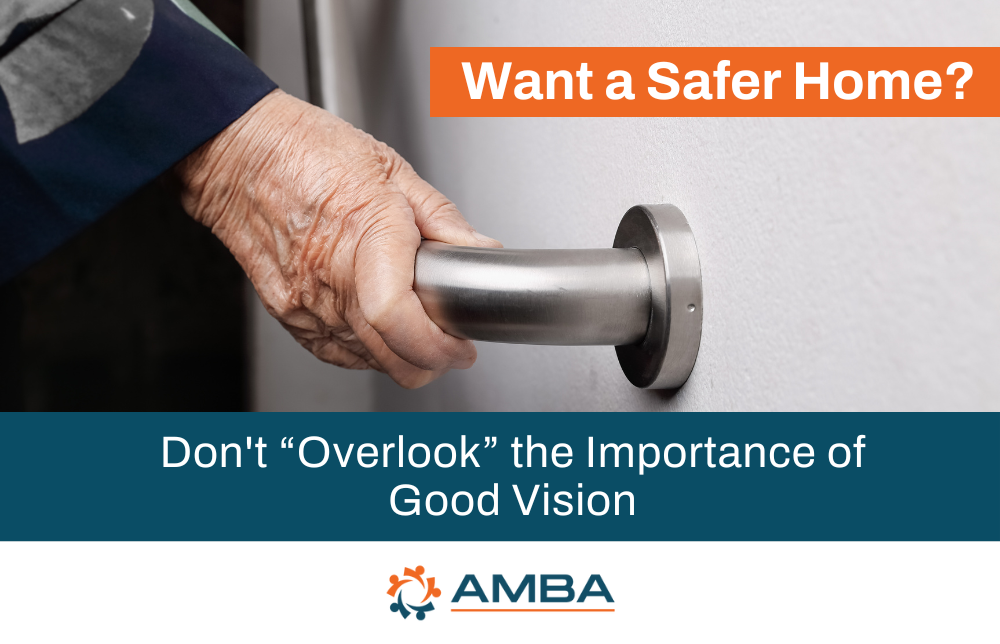
Want a Safer Home? Don’t “Overlook” the Importance of Good Vision

Falls are one of the most significant health risks for older Americans. According to reports, more than one out of four adults over 65 suffered at least one fall in the past year. One of the most significant factors for fall risk is quality of vision. Studies have found that impaired eyesight more than doubles the danger.

Falls can lead to injury, loss of independence, and worse. Many of these injuries are avoidable. From updating your home to making sure your eyesight is in good health, there are simple ways to protect yourself from the risks of a fall.

[INFOGRAPHIC]
Did You Know?
Each year, more than 25% of older Americans suffer a fall. Impaired vision more than DOUBLES the danger.
www.cdc.gov/falls/data-research/facts-stats/index.html

How To Prevent Falls in Your Home: 

1. Lighting – Make sure all rooms – especially stairs – are well-lit. Put night lights and light switches near your bed. Keep a flashlight by your bed in case the power goes out.

2. Stairs – Install handrails on both sides of all stairs inside and outside your home.

3. Floors and Rugs – Fix uneven floors and repair loose floorboards and carpeting. You can also put non-slip strips on tile and wooden floors. Be careful to avoid walking on slippery, recently washed floors.

Keep your floors clutter-free, including cords, papers, shoes, books, boxes, newspapers, and electrical cables.

If you have small rugs on your floors, consider removing them. Otherwise, to help make them safer and more stable, use double-sided tape, tacks, or slip-resistant backing. 

4. Grab Bars – Grab bars can help anyone stay safer in the bathroom. Install grab bars to help you climb into the tub or stand in the shower. They will steady you while you reach for the hand-held shower. They will help you get on and off the toilet. They can even keep you from slipping on wet tiles.

Use non-slip mats in the bathtub or shower. You can also use a bath seat to sit on while showering.

5. Make Sure Your Eyes Are Healthy – Poor vision can increase the risk of falls. Not only can poor vision prevent you from seeing obstacles in your path, but being able to see well is vital for your overall ability to balance. Remember to:

  • Use prescribed glasses and avoid wearing sunglasses indoors.
  • Bifocals can blur your vision when navigating steps, curbs, or edges. When stepping over curbs and on stairs, look through the distance portion of your glasses, which can provide a clearer view.
  • Add nightlights in the bedroom, bathroom, and hallway to help you navigate in the dark. Don’t forget to give your eyes time to adjust when moving from well-lit to poorly-lit areas.
  • Get annual eye exams to update your glasses prescription and catch early warnings of issues like glaucoma and cataracts.

Remember: everything you do to prevent a fall is an investment in your health…and your vision! AMBA and NCRGEA have a comprehensive Vision Plan at affordable rates. Advantages include annual WellVision checkups, 100% coverage for most lenses (even progressives!), and thousands of nationwide in-network providers. Sign up today – acceptance is GUARANTEED! – at AMBAdentalvision.com/NCRGEA or call or call 800-956-1228 Mon.-Fri. 8am-6pm ET.  

Sources:

https://www.mayoclinic.org/healthy-lifestyle/healthy-aging/in-depth/fall-prevention/art-20047358

https://www.cdc.gov/falls/data-research/facts-stats/index.html

https://www.cdc.gov/vision-health/prevention/older-adult-falls.html

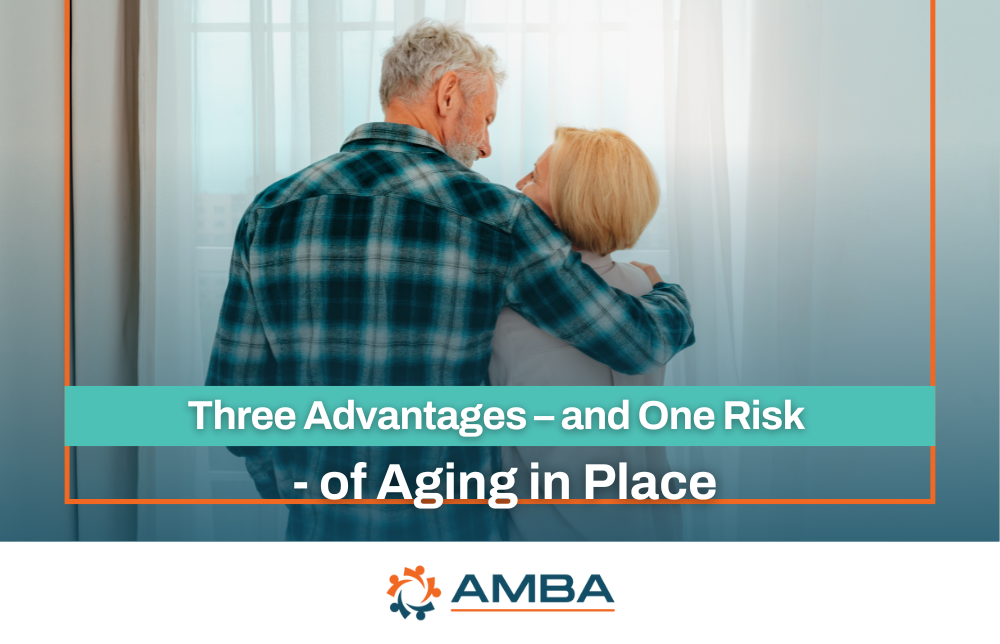
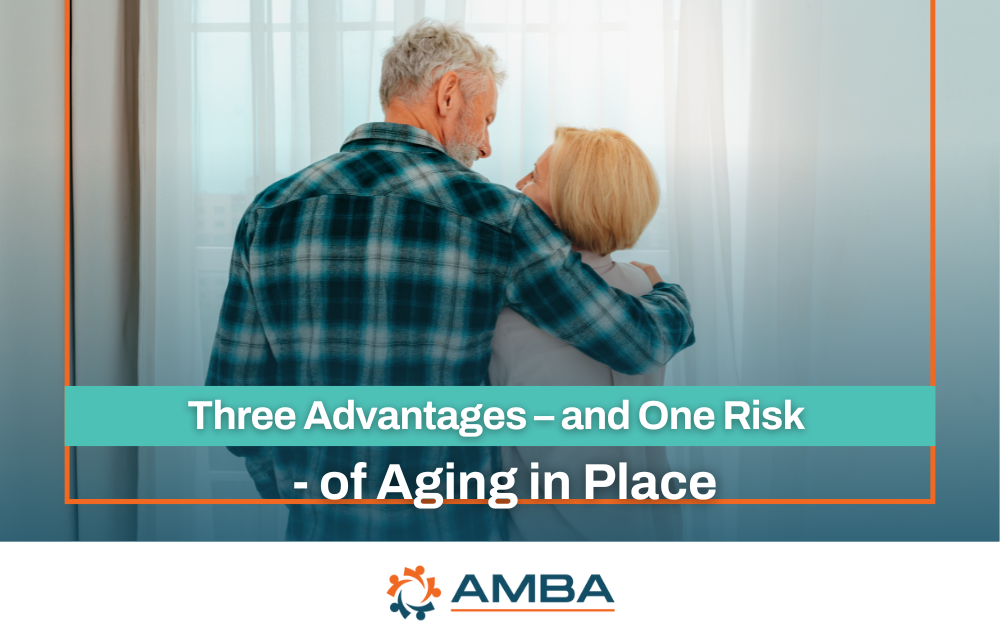
Three Advantages – and One Risk – of Aging in Place

The overwhelming majority of Americans prefer to enjoy retirement “aging in place,” continuing to live independently in their homes and communities. In fact, 80% of Americans aged 50 and older say they want to remain in their own homes.

Aging in place has many advantages, but understanding and preparing for risks is also important.

Three Advantages of Aging in Place

1. Independence and Empowerment

Nothing beats maintaining control over your schedule. You can come and go as you please, have guests (and privacy) when you want, and enjoy autonomy and freedom. Aging in place is an excellent option for people who wish to maintain a sense of independence and control over their lives. It can also let you enjoy maintaining the same home and community where you raised your family and built many memories.

[INFOGRAPHIC] Did You Know?
A recent study concluded that the rate of cognitive decline for older Americans was 70% less in people with frequent social contact than those with low social activity.

2. Physical Health Benefits

Aging in place gives superior access to the physical fitness activities you most enjoy, including gyms and exercise classes, golf courses, or local yoga or Pilates studios. The more access to the physical fitness routines you most enjoy –going to the gym, walking outside with friends, or taking classes at local yoga or Pilates studios – the more likely you’ll stick to them and reap their benefits.

3. Mental Health Benefits

Aging in place also has advantages for mental health. Access to familiar and beloved existing social networks and activities, community organizations and clubs, favorite restaurants and hang-out spots, and entertainment like theater or movies is critical for someone to remain engaged and enthusiastic about their daily activities. A recent study concluded that removing an older person from their home and introducing them to new environments and social settings means stripping them of foundational long-term memory stimuli, which can result in confusion, stress, and depression.

One Significant Challenge to Living Independently

For all the advantages of living independently, thinking ahead to possible challenges is crucial. Perhaps the most significant thing is being prepared if you have an accident or medical emergency at or near home and can’t drive yourself to the hospital or if a friend or loved one is unavailable. What if you fall and break your leg? What if you recognize the signs of a heart attack?

An ambulance ride to the emergency room might be necessary in these emergencies. However, most insurance – including Medicare – does not cover the cost of medical emergency transportation. That’s why you need a Medical Air Services Association (MASA) plan from AMBA and NCRGEA. Services are paid in full, with no deductibles, co-pays, or dollar limits. MASA covers your ambulance or airlift, regardless of age or medical condition. Learn more at www.AMBAmedtransport.com/NCRGEA or call AMBA at 800-956-1228 M-F 8am-6pm ET.

Sources: https://www.ncbi.nlm.nih.gov/pmc/articles/PMC7205644/

https://greatergood.berkeley.edu/article/item/how_social_connections_keep_seniors_healthy

https://www.ncbi.nlm.nih.gov/pmc/articles/PMC9495472/#:~:text=For%20some%2C%20aging%20in%20place,prefer%20to%20age%20in%20place

Book Lovers Enjoy More Than Just a Good Story: The Health Benefits of Reading for Older Adults

What if there was a miracle drug that could help reduce stress, enhance memory, improve sleep, provide community, and supply information and entertainment all the while? And what if it wasn’t a drug at all?

Everyone, especially older people, can enjoy the incredible benefits of reading. Reading is more than a leisurely activity. For book lovers and news hounds alike, AMBA is here to reveal how reading can positively impact health and well-being.

The Many Benefits of Reading for Older Adults

Muscle Up Your Memory

Want to be a true muscle-head? Research proves that reading strengthens your brain. Studies have proven that people who engage in mentally stimulating activities such as reading have slower rates of memory decline than those who do not.

Reading exercises your memory, which is critical to the short-term recall of everyday events. Regular mental workouts such as reading can strengthen the brain’s neural network, helping your mind become more receptive to learning and memory retention.

Data shows that engaging in frequent cognitive activity later in life can reduce the rate of decline by 32%.

Getting Lost in A Book Can Help You Find Peace of Mind

The mental benefits of reading can improve your quality of life. Research shows that reading beats listening to music, having tea, or going for a walk. Studies found that once participants dove into a book, their heart rate and muscle tension relaxed in a mere six minutes.

Frequent readers are also less prone to anxiety and acting impulsively. Reading improves analytic skills, making readers more likely to think before reacting and better equipped to process information, prepare for life’s uncertainties, and reduce their anxiety.

Want to Count Sheep? Read a Book.

Creating and maintaining a bedtime ritual, such as reading, signals the body that it’s time for sleep. For the body’s sleep cycle, reading is healthier and more effective than falling asleep watching TV or taking out the phone and reading social media posts. In fact, the blue screens of these devices are proven to disrupt sleep cycles and keep people awake longer.

Reading Can Protect Against Dementia and Depression

One of the most promising benefits of reading for older adults is that it can help preserve brain structures important to cognition later in life and reduce the speed of cognitive decline.

Research suggests that adults in their 70s who engaged in mentally intense hobbies, such as reading, from ages 20-60 build a reserve of neuronal connections and are less likely to develop dementia and Alzheimer’s disease.

Reading Can Be a Great Way to Stay Social!

Joining a book club is a great way to boost your reading habits, meet new friends, and enjoy social discussions. Book clubs can offer stimulating conversations where you and others can share insights, socialize, and have fun together.

If you’re not already a book lover, don’t fret! There are many ways to get inspired to pick up a book:

  • Audiobooks—If reading from a book isn’t your thing, try audiobooks. They’re a great option because you can listen in the car, at home, or on a walk!
  • Largeprint books. Many publishers now offer large-print books, typically printed in 16- to 18-point font (compared to regular print, which is between 10 and 12 points).
  • Ereaders—E-readers, such as Kindles or Nooks, are lightweight electronic alternatives to printed books. The advantages of E-readers include choosing the font most comfortable for you, adjusting its size, and storing a large quantity of books on your device. E-readers can also access magazines, newspapers, and other publications.

Whether it’s history, sports, gardening, romance, or all of the above, you can find a book that interests you. Given the proven health benefits of reading, even adding a small daily dose to your routine could be just what the doctor ordered!

Sources: https://www.ncbi.nlm.nih.gov/pmc/articles/PMC6245064/

https://www.neurology.org/doi/10.1212/wnl.0b013e31829c5e8a

https://www.telegraph.co.uk/news/health/news/5070874/Reading-can-help-reduce-stress.html

Now That’s a (Fresh) Breath of Air! Remedies to Overcome Bad Breath.

You brush and floss every day. Maybe you also use a tongue scraper and gargle with mouthwash. But still, somehow, you’re aware of it, and so are others around you. Why can’t you stop suffering from bad breath?

According to research, over 50% of adults complain of chronic bad breath, and older adults are more prone to the problem.

Many people think there’s nothing they can do to prevent bad breath. AMBA is here to clear the air (literally!) of that misconception. The road to fresh breath can be very simple and straightforward. The first step to preventing bad breath starts with understanding the source of the offending odor.

Common Causes of Bad Breath

Food

Bad breath is often a temporary problem caused by eating certain foods. Garlic, onions, and various spices are among the usual suspects, as are alcohol, smoking cigarettes, and chewing tobacco. Preventing bad breath caused by these factors can be solved simply by avoiding the offensive substance.

In fact, many foods can help improve your breath. These include crunchy fruits and vegetables. These foods – such as apples, citrus fruits, carrots, and more – can help to fight bad breath in two ways. First, they scrub away plaque and bacteria from the teeth as you chew. Second, they stimulate saliva flow, which helps to rinse away odor-causing bacteria, sulfur compounds, and food debris. Chewing on fresh herbs like basil, parsley, and mint can also help to freshen the breath naturally.

Dry Mouth

Older adults frequently suffer from dry mouth, also known as xerostomia. Prescription medications cause more than 90% of dry mouth cases. Many common prescriptions can cause a decrease in salivary function.  The resulting lack of sufficient saliva to wash away food debris can cause bacteria to accumulate. Dry mouth can also be an effect of autoimmune diseases, diabetes, or chemotherapy. Keeping your mouth moist can help prevent bad breath. Many older people rely on artificial saliva products. But sipping plenty of water throughout the day and sucking on sugarless lozenges or candy can help, too.

Gum Disease

If you don’t brush your teeth regularly and thoroughly, bacterial plaque can begin to collect on your teeth and gums, leading to gum disease. The risk of gum (periodontal) disease increases with age: 70% of adults 65 and older in the U.S. suffer from the condition.

One of the first warning signs of gum disease is bad breath. As gum disease progresses, the severity of the odor increases due to inflamed gum tissue and excessive bleeding.

Treatment for periodontal disease can help eliminate bad breath. Your dentist will likely first remove tartar deposits so that the gums can heal. Ask your dentist what steps you can take in your home care routine to reduce the bacteria in your mouth and prevent it from accumulating again.

Artificial Teeth

Bacterial plaque can affect dentures, bridges, and crowns as much as natural teeth, so regular oral cleaning remains as crucial as ever. One effective way to remove plaque from dentures is to take out your dentures daily and clean them with the appropriate cleansers. Likewise, food and bacteria can also become trapped under fixed crowns and bridges. Clean under your bridge or crown with the floss threaders or small interdental brushes.

If you regularly experience bad breath, talk with your dentist about potential underlying conditions. Problems such as gingivitis, cavities, or tonsil stones could also cause bad breath. Your dental professional is best suited to diagnose oral health and hygiene problems. It’s just one more reason why regular checkups are so important. AMBA and NCRGEA can help you keep your mouth healthy with a Dental Plan that includes coverage for routine cleanings and many procedures, including fillings, crowns, implants, and more. Even better, there is NO WAITING PERIOD for covered services! Sign up now at www.AMBAdentalvision.com/NCRGEA or call 800-956-1228 Mon.-Fri. 8am-6pm ET.

Sources:

https://www.ncbi.nlm.nih.gov/pmc/articles/PMC9157195

https://www.uhhospitals.org/blog/articles/2015/04/grandma-your-breath-smells-funny

AMBA’s October Recipe: Kickin’ Chicken Pumpkin Pizza

Pepperoni, sausage, or other unhealthy toppings on pizza? That’s so last season! AMBA’s October recipe puts a fresh, delicious, healthy spin on homemade pizza. This recipe swaps traditional marinara sauce for pureed pumpkin. It is topped with chicken, peppers, and creamy part-skim mozzarella. You can also use other healthy toppings in a fun, family-friendly way, like sweet potato instead of pumpkin, or make it meatless with chickpeas or mushrooms instead of chicken.

You can make this recipe gluten-free using a cauliflower pizza crust instead of whole wheat.

Ingredients

  • 2 prebaked 12-inch thin whole wheat pizza crusts
  • 1-1/2 cups cubed cooked chicken
  • 1-1/2 cups shredded part-skim mozzarella cheese
  • 1 tablespoon olive oil
  • 3/4 cup canned pumpkin
  • 2 chipotle peppers in adobo sauce, minced
  • 1/4 teaspoon salt
  • 1/8 teaspoon pepper
  • 1/2 cup mild chunky salsa
  • 1/4 cup thinly sliced red onion

DIRECTIONS

  1. Preheat oven to 425°. Place crusts on ungreased baking sheets; brush with oil.
  2. Combine pumpkin, minced chipotle peppers, salt, and pepper; spread over crusts.
  3. Combine chicken and salsa and spoon over the pumpkin layer.
  4. Top with cheese and red onion.
  5. Bake until edges are lightly browned and cheese is melted, 12-15 minutes.
  6. Let stand for 5 minutes before cutting. If desired, sprinkle with cilantro.
  7. Serve and enjoy!

Have a recipe you’d like to share?