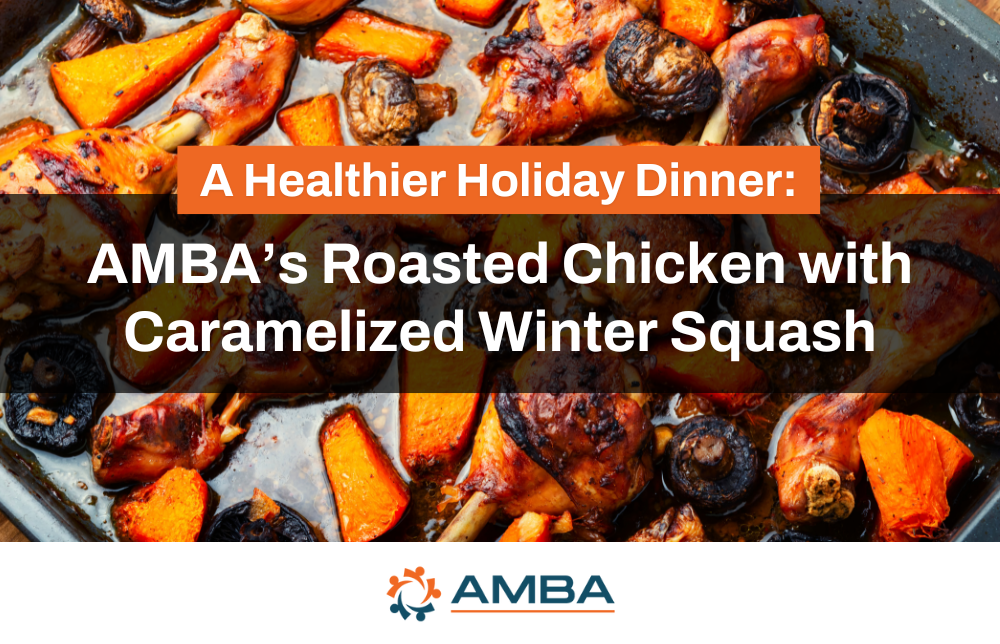
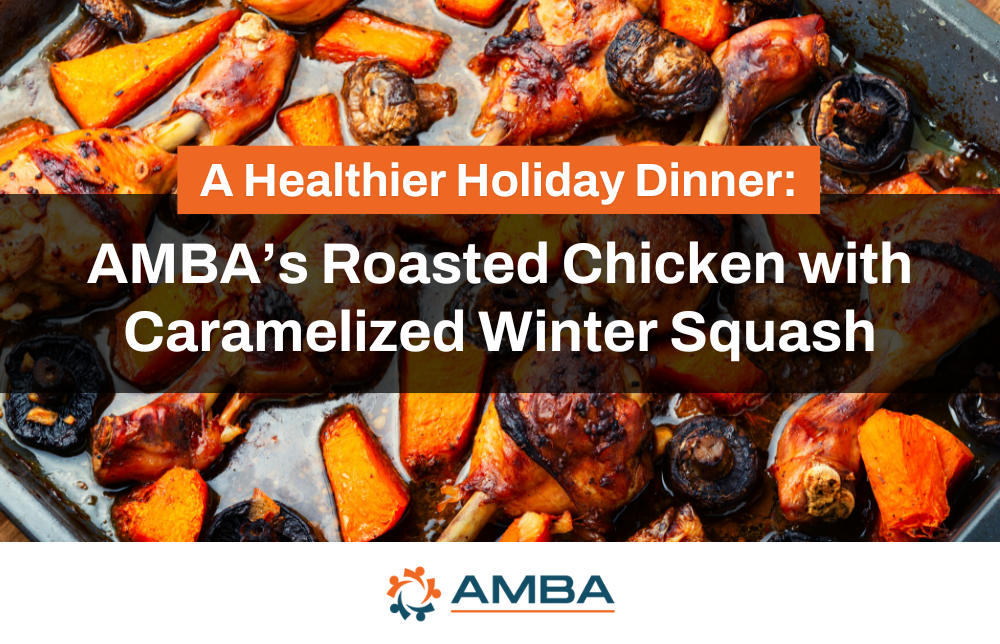
As winter approaches, so do our cravings for heartier meals. This month’s AMBA recipe, Roasted Chicken with Caramelized Winter Squash, offers just the right amount of savory goodness. It contains plenty of protein, just a touch of sugar, and a dash of spicy seasonings for an extra kick. Everything works together beautifully, with the sweet and tangy flavors carrying through from the caramelized squash to the oven-roasted chicken.
This recipe is a satisfying, healthy, and naturally gluten-free comfort food. To complete the meal, you can add a simple green veggie.
How to Make Roasted Chicken with Caramelized Winter Squash
Many believe estate planning is only for people with millions of dollars in net worth. However, estate planning has many components, including your finances as well as healthcare, and it’s essential to make your wishes known.
Estate planning can be one of the most complex things Americans deal with. The legal and financial planning involved is filled with time-consuming details, difficult decisions about distributing your will to loved ones, and daunting misconceptions about the process.
However, estate planning is essential to ensure your loved one’s long-term financial security. AMBA is here to help you bust the myths about estate planning and provide the information you need to have peace of mind knowing your loved ones are protected.
Myth #1: Only the Wealthy Need to Do Estate Planning
In 2024, the lifetime estate tax exemption was $13.61 million per individual or $27.22 million per married couple. Unless Congress votes to change the policy, the exemption will revert to approximately $5 million per individual ($10 million per married couple) on January 1, 2026. That means many more families will be subject to estate tax.
Even if your net worth is still short this sum, anyone over 18 should explore estate planning, regardless of assets. Estate planning can also articulate important matters such as:
Making clear your healthcare wishes, such as Do Not Resuscitate (DNR) orders, are understood and carried out.
Authorizing your finances to be managed by a designated, trusted individual in case you cannot do so.
Providing financial security for your loved ones, should you pass away unexpectedly.
Naming a guardian for minor children.
Creating a structured plan for minor children who inherit assets to make sure they’re financially mature enough to receive and use assets.
Myth #2: I Have Plenty of Time Before I Have to Worry About Estate Planning.
We all know that accidents and health-related emergencies can happen to anyone at any time. And though you can’t prevent the unexpected, you can anticipate the need to protect yourself and your loved ones. Estate planning helps ensure you have the necessary documents so your family members can obtain medical information, visit you in the hospital, or help manage your finances.
All adults should have a HIPAA waiver, healthcare power of attorney, living will/advanced medical directive, financial power of attorney, and a basic will. A trust may also be advisable.
Myth #3: Estate Planning is Expensive.
Though the cost of estate planning can add up, the expense is worth it so your family can avoid the stress, tax liabilities, and potential legal fees they would face without it.
There are resources now available that can make the cost relatively low. For instance, many documents are available online for a small fee. If you have a wealth manager, check in with them to be sure your estate planning documents align with your financial plan.
Myth #4: I Don’t Need an Estate Plan Because My Assets Automatically Pass to My Heirs.
Intestacy is the condition of the estate of a person who dies without a valid will or other binding declaration. If you die without a will or trust, intestacy rules will dictate who receives your assets or handles your financial affairs. These might be different from the people you would have chosen. Also, significant time, expense, and stress for loved ones are frequent stress points for the loved ones of people who pass away intestate.
Myth #5: A Last Will Guarantees Your Assets Will Avoid Probate.
Although a will is one of the most important documents you can have, remember that your life, goals, and even your family can change over time. Estate planning is not a one-time event. It’s an ongoing, evolving concern that needs to keep up with changing needs. Be sure to review your will and ensure it reflects your current wishes.
Myth #6: I’d Get Life Insurance, But I Can’t Find a Policy that Will Accept Me
A Whole Life policy can help your family have a financial safety net after you’re gone. However, many policies make it difficult for applicants to get accepted for a policy. Your association and AMBA can help. They have a Whole Life policy that guarantees acceptance: no medical exams or health questions to answer. Joining is easy: you can purchase your policy online. It even includes a no-obligation 60-day return policy.
Our new office space is great, but our efforts to forward our USPS mail haven’t gone as smoothly as we’d hoped and planned.
If you recently mailed your NCRGEA membership renewal using our return envelope, it may get returned to you with a yellow sticker or the message, “insufficient address.” Here are several options to send in your renewal dues:
Re-address the envelope with the new address below, and mail it again. (This will require a new postage stamp.) NCRGEA 3737 Glenwood Ave. Suite 150 Raleigh, NC 27612
Call us at 919-834-4652 or 1-800-356-1190 during office hours to make your dues payment by credit or debit card.
Make your payment online at Membership Form – NCRGEA.
If you have not yet made your payment, please use one of the options above. We apologize for any inconvenience and thank you for your patience! If you have questions, please give us a call at 919-834-4652 or 1-800-356-1190. Our staff will be happy to help you.
Kind regards, and happy holidays!
Our office will be closed for the holidays from December 24 through January 2. If you have questions concerning NCRGEA’s dental or vision plans during this time, please contact AMBA, our third-party administrator, at 1-800-258-7041, 8am–5pm CST. For information regarding your pension, state health benefits, etc., visit MyNCRetirement | My NC Retirement or contact the Retirement System at 919-814-4590.
Ready to make the most wonderful time of the year even better? AMBA Discounts can help you save big this Black Friday and throughout the holiday season! Take advantage of all the thoughtful savings available through AMBA and your association. Skip the crowds, save money, and give your family the perfect gifts. Now that’s something to be thankful for!
Electronics – The latest tech can be expensive, but not with AMBA Discounts on your side! We’ve got all the biggest and best brands, including Apple, Samsung, Lenovo, and Dell. We also offer significant savings with Anker, the maker of the industry’s best chargers, power banks, and cables.
Personal Touch– Whether your loved ones have a sweet tooth or a taste for elegance, AMBA Discounts has you covered. From delectable edibles like David’s Cookies and Gourmet Dourmé Chocolate USA to fine jewelry from fine vendors like Enso Los Angeles, the Tresnor Collection, and others, explore the latest savings available to you.
Family Vacations – Nothing brings us together like getting away together. There’s no better way to create lifetime memories and bond with the whole family than with a family vacation. AMBA Discounts partners include Adventures by Disney (AMBA Discounts members earn 4% cash back on your ultimate family enrichment vacation), Villas of Distinction (which gives members 2.5% cash back and $100 credit at hundreds of luxury vacation villas worldwide), and Bellagio Las Vegas (with up to 20% off room rates), and so many more options.
There are so many more savings to explore, including car rentals, hotels, clothing, dining, and more. AMBA Discounts provides excellent savings for the perfect gift for everyone on your holiday wish list.
Best of all, your membership is absolutely FREE! Start your Black Friday savings today – visit www.passportcorporate.com now!
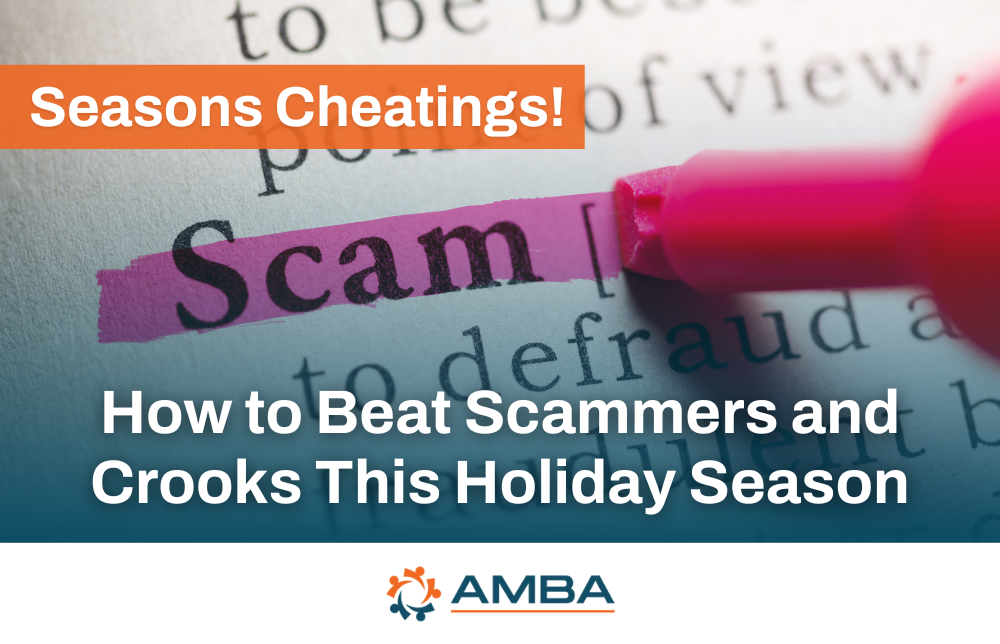
It’s the most wonderful time of the year…for scammers. The holiday season is scammers’ favorite time of year. All those busy, distracted people buying gifts, booking trips, and texting like crazy are ripe for digital robbery.
Scammers have grown incredibly skilled at pushing our buttons and playing on our emotions. But don’t worry. AMBA has the info you need to protect you and your loved ones from some of the most dangerous holiday scams, so you’ll know how to avoid them.
Nearly 75% of Americans experienced at least one type of holiday scam last year.
Auld Lang Scam
During the holidays, old acquaintances and friends fill our inboxes and social accounts with hellos and updates. Scammers know these messages bring out our warm-and-fuzzy side, making us more susceptible to phishing emails or phony cries for help.
These are attempts to exploit your compassion for others. If an old friend contacts you and asks for financial assistance, our natural gut response is to help. And every scammer knows it’s easier to hack a person than a machine. Give your friend a call and confirm whether or not their email is genuine.
The Many Dangers of Gift Cards
A common technique used by fraudsters involves gift cards. The scam involves persuading you to buy a gift card and then asking you to either send the physical card to them or tell them the account numbers and information.
This scam can come via email, text message, or direct call. The tactics the scam artists employ also vary, but they usually try to instill a sense of urgency and panic. Sometimes, phishing emails urge you to send gift cards to pay for late fees or fictitious costs. Sometimes, they invent emergencies involving a loved one to trick you into buying and sending cards.
If this happens to you, it’s essential to slow down and question whether you’re reacting emotionally or rationally. Directly contact whoever contacted you—whether it’s your bank, credit card company, or friend—and verify whether the request is authentic.
Even buying gift cards for loved ones has unique dangers. Thieves can access the gift card info on the racks at the store and monitor when someone has purchased (and then activated) the card. You or your loved one will find the card has already been spent before you can use it.
Fake Online Stores Pose a Real Danger
Shopping online at your favorite stores can have dangerous results: thousands of fake online stores are waiting to steal your money, personal information, and credit card information.
Fortunately, these stores aren’t too hard to spot if you know the warning signs to look out for. Some ways to identify a problem include if the URL is misspelled, conspicuous spelling and grammar mistakes throughout the site, or the images appear pixelated (as a result of being copied from a genuine store website).
And as the old saying goes: If the prices seem too good to be true, they probably are. Scammers like to take advantage of people who want to take advantage of a great deal. Resist the urge to make an impulse purchase, and take the time to make sure you’re on a legitimate website.
You Want to Give, Not Give Away Your Identity
For scammers, every tragedy is an opportunity. Fake donation websites, unfortunately, are an effective tool for digital thieves.
These charitable giving websites – whether for crisis appeals, dog shelters, or international aid – are carefully crafted to exploit our emotions and sense of urgency. This is why these sites frequently pressure you to donate now.
If you want to donate safely, take a moment to type in the actual website of trusted organizations to make your gift. Neverclick on a link in an unsolicited email or download an attachment from a social media post.
False Delivery-Notification Texts
Many of us receive text messages about incoming packages during the holiday season, so this simple ruse is especially effective during this time of the year. In this scenario, you’ll be asked to click on a link prompting you to enter personal information to verify your delivery.
Frequently, this scam will install malware on your phone or computer to secretly steal your information. Occasionally, you’ll even be asked to call a “customer service representative,” who will need your account information to verify your purchase. Don’t fall for it.
Porch Pirates
Home delivery can be a welcome convenience but also a great danger. You’re probably familiar with “porch pirates,” thieves who come to your door and steal your packages and gifts.
There are solutions to help secure your deliveries. One is to opt into delivery-tracking alerts, which will let you know when a delivery will arrive. Another is installing a home security camera, which can have a deterrent effect to keep thieves away and provide evidence if your property is stolen. You can also have packages delivered to your workplace or a nearby UPS store, post office, or Amazon Locker.
Posting Your Holiday Travel Plans? That’s When Scammers Go to Work
Heading out of town for the holidays? Posting your travels creates the perfect opportunity for mischief. You’re informing people – including scam artists – when you’ll be away from home and where you’re going. This can leave you vulnerable on two fronts.
Scammers can alarm travelers with fake offers, insurance cards, visa demands, extra booking charges, etc. One popular ploy is to send out flight-cancellation emails that offer a full refund. The tell? You’ll be asked to provide your bank details. Also, don’t use social media to complain about a flight or holiday. Thieves monitor travel sites and are eager to offer “help.”
If you can resist the urge to post your holiday plans and adventures until after you’ve returned, your home and finances can be much safer. If you have an issue with a merchant during your holiday, contact them directly.
AMBA wants to help ensure you and your loved ones’ holidays are fun, festive, and safe. Following the above tips will help. AMBA will continue to update you on how to stay safe from scam artists. It’s all part of how AMBA looks out for you, your well-being, and your financial safety every day.
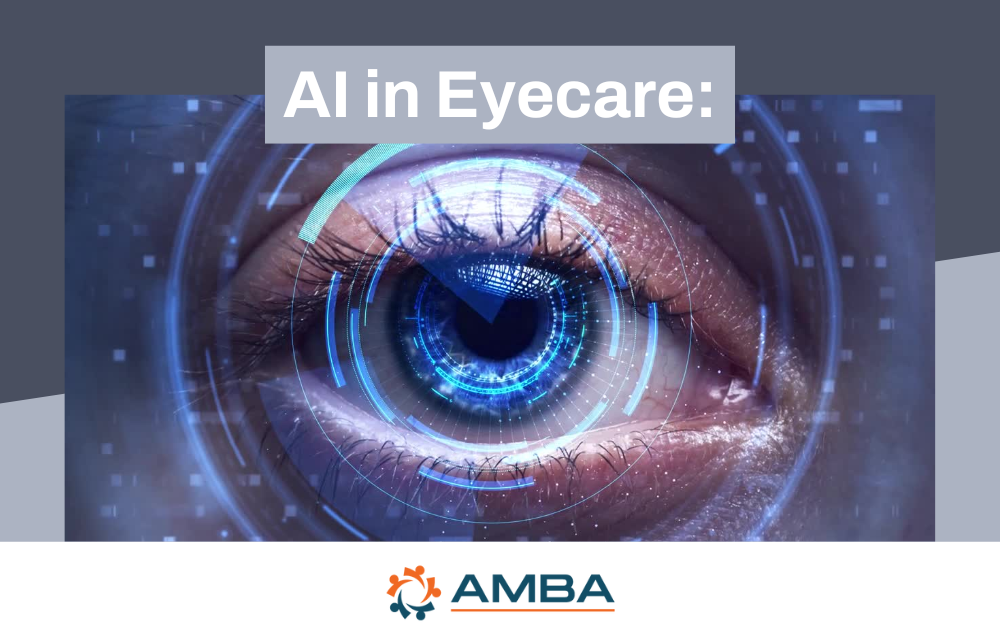
Artificial Intelligence (AI) is becoming an increasingly important tool in all walks of life. AI’s ability to analyze data, identify patterns, and make predictions to improve learning and problem-solving has been a game-changer. Healthcare—and eye care in particular—is no exception, as AI is proving to be a valuable tool in helping professionals gain new insights and assist patients in achieving improved diagnoses and results.
Current Uses of AI for Eye Care
Some applications for AI in eye disease detection include:
AI is already being used to detect Diabetic Retinopathy, a complication of diabetes that affects the blood vessels in the retina. If not treated early, this condition can cause vision loss or even blindness. AI, however, has started to assist professionals in determining whether someone has the early signs of the condition.
AI is also being utilized to detect signs of glaucoma, a common issue for older adults. Like diabetic retinopathy, glaucoma is a group of eye conditions that can cause blindness if not detected and treated early. With optic nerve images, AI has been used to identify early signs of glaucoma, enabling diagnosis and treatment.
AI can help address blindness and vision impairment in various ways. Early detection, diagnosis, and personalized treatment based on specific patient needs are just the start. AI will also be key in assistive technologies, including text-to-speech capabilities, smart glasses, and object recognition software.
Potential Uses of AI in Eye Care
As technology continues to evolve, AI will be able to screen ophthalmic diseases with more efficiency and diagnose eye conditions automatically without human intervention. This will make it easier for doctors to spend time treating patients rather than diagnosing them, customize treatment plans, perform remote consultations, and more. AI has the potential to even assist researchers in developing new treatments for previously untreatable conditions.
AI in eye care will continue to improve as long as deep learning evolves. However, AI still has many limitations. Seeing your eye care professional for eye checkups remains critical to maintaining your vision’s health. The Vision Plan from AMBA and NCRGEA covers annual WellVision checkups and features many significant advantages, including 100% coverage for most lenses (even progressives!) and thousands of nationwide in-network providers. Sign up today – acceptance is GUARANTEED! – at www.AMBAdentalvision.com/NCRGEA or call 800-956-1228.
What’s Thanksgiving without stuffing? Let’s face it: stuffing is a mainstay of the Thanksgiving table. However, it can also be challenging for those who need a vegetarian or gluten-free alternative or who want to avoid high-calorie processed foods.
That’s where AMBA’s Healthy Vegetarian Stuffing comes in. AMBA’s recipes are committed to helping you live your best life – including bettering your overall health and helping you discover delicious, healthier alternatives to your favorite foods! This twist on traditional Thanksgiving stuffing uses quinoa, a fluffy, slightly crunchy, high-protein, gluten-free alternative grain. This recipe can be used to stuff a turkey or as a side dish.
Spice It Up!
Add spices like rosemary, sage, pepper, Himalayan salt, cumin, ground jalapeno pepper, and Cuban seasoning to the olive oil to enhance the flavors.
Servings: 8
Prep Time: 25 minutes
Cook Time: 25 minutes
Ingredients
4 cups vegetable stock
2 cups quinoa
2 small zucchinis, cut into 1-inch cubes
1 butternut squash – peeled, seeded, and diced
1 bunch green onions, chopped
1 cup diced dried apricots
1 cup dried cranberries
1 cup chopped fresh parsley
1 lime
¼ cup olive oil
Directions
In a saucepan, bring vegetable stock to a boil. Reduce heat to low.
Add in the quinoa and stir.
Cover the pan and simmer for 10 to 15 minutes or until the quinoa absorbs the liquid. Remove from heat.
Heat olive oil in a large skillet over medium heat.
Cook and stir in the zucchini and butternut squash in the hot oil until slightly browned, approximately 10 minutes.
Stir quinoa into the vegetables and gently mix green onions, apricots, cranberries, and parsley into the stuffing.
Drizzle with lime juice.
Serve and enjoy.
Your friends at AMBA wish you and your loved ones a Happy Thanksgiving!