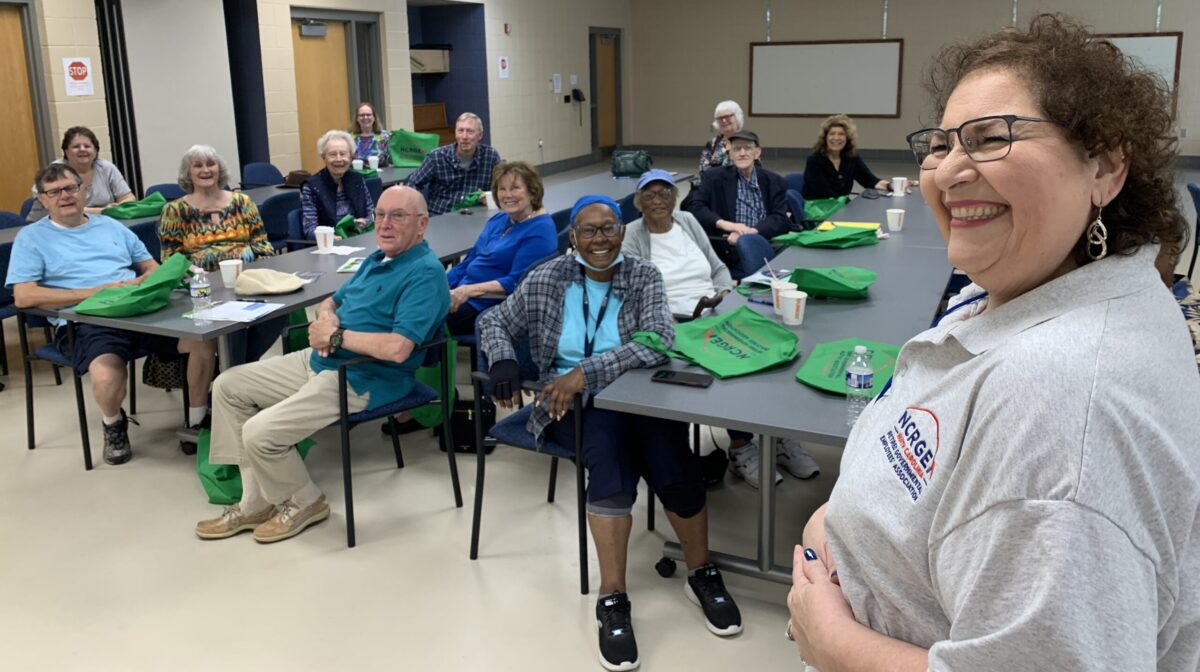
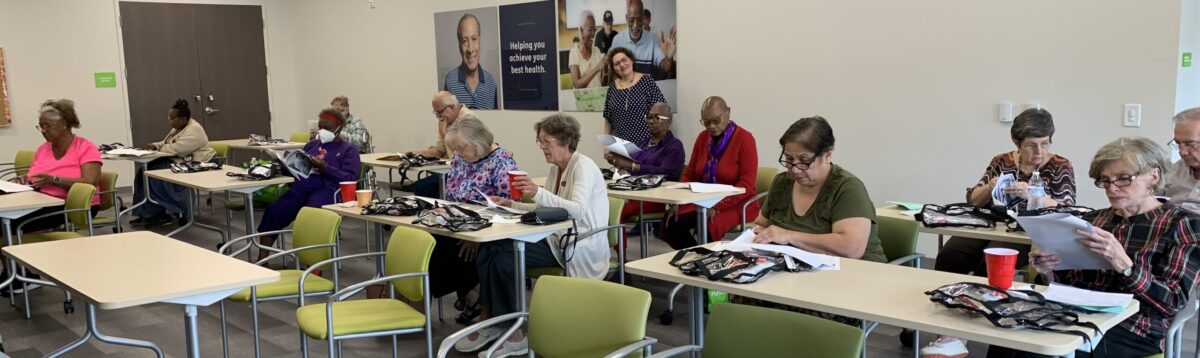
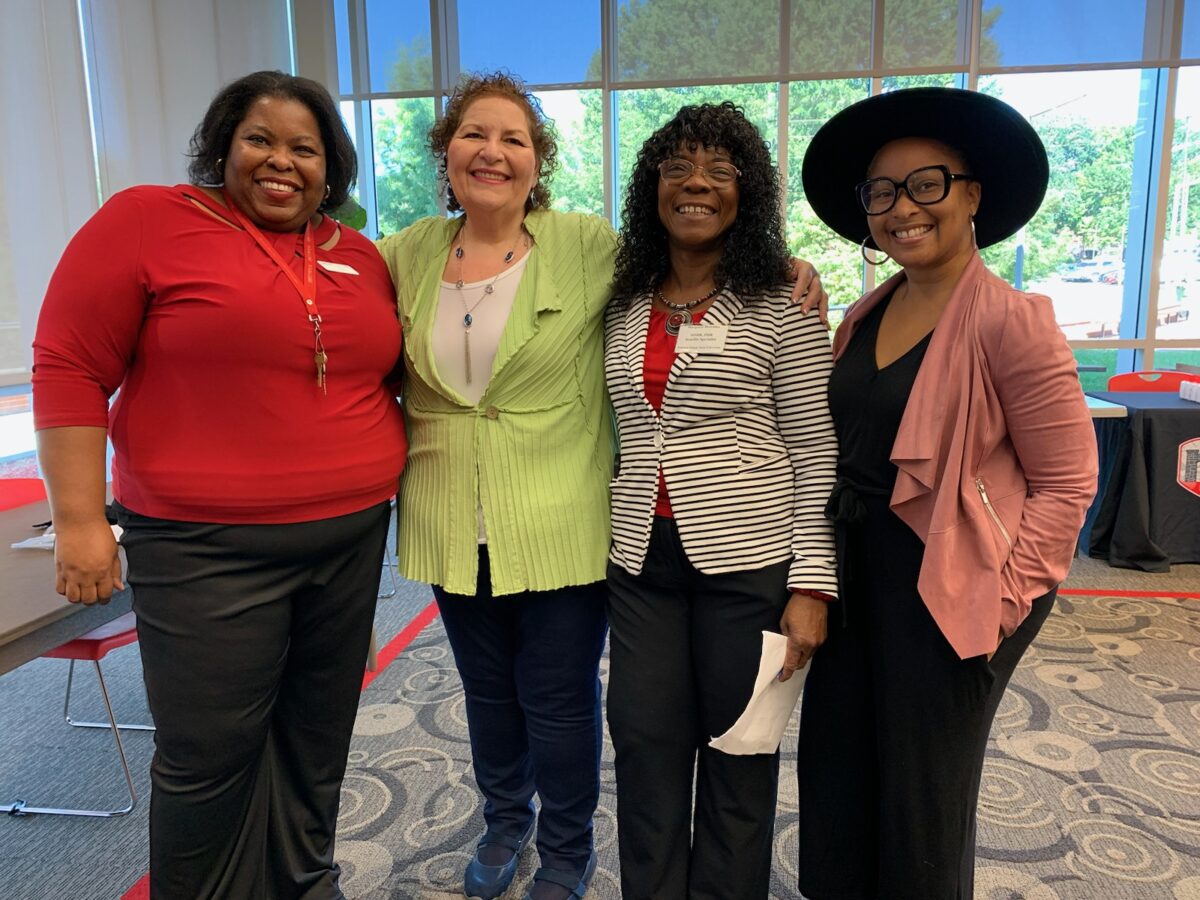
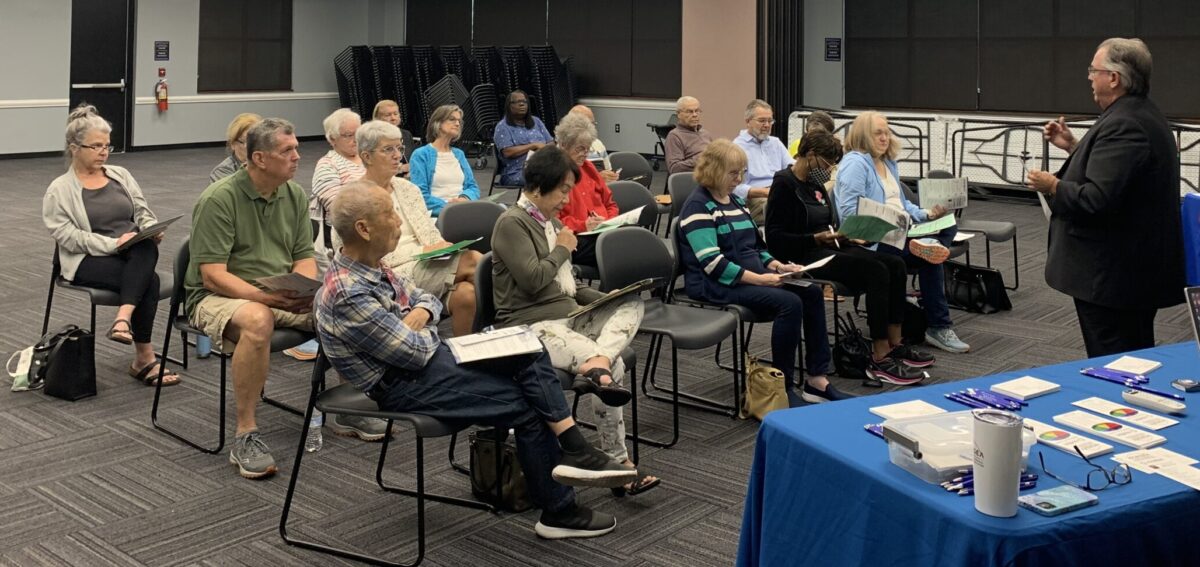
NCRGEA is inviting all retirees from public service, both state and local, to join us for refreshments and a discussion of issues that affect public service retirees of North Carolina.
We’ll talk about current legislative issues, retiree issues, and retirement benefits available to all public service retirees.
This is a great opportunity to meet and speak with other retirees who share the same concerns you have and to talk to Josephine, Outreach Coordinator at NCRGEA, with your questions.
Registration is FREE: Click on the button at the top or use this link.
Location:
Linwood Crump Shiloh Community Center | 121 Shiloh Road | Asheville NC 28803
NCRGEA is inviting all retirees from public service, both state and local, to join us for refreshments and a discussion of issues that affect public service retirees of North Carolina.
We’ll talk about current legislative issues, retiree issues, and retirement benefits available to all public service retirees.
This is a great opportunity to meet and speak with other retirees who share the same concerns you have and to talk to Josephine, Outreach Coordinator at NCRGEA, with your questions.
Registration is FREE: Click on the button at the top or use this link.
Location:
Watauga County Parks and Recreation | 231 Complex Drive | Boone NC 28607
NCRGEA is inviting all retirees from public service, both state and local, to join us for refreshments and a discussion of issues that affect public service retirees of North Carolina.
We’ll talk about current legislative issues, retiree issues, and retirement benefits available to all public service retirees.
This is a great opportunity to meet and speak with other retirees who share the same concerns you have and to talk to Josephine, Outreach Coordinator at NCRGEA, with your questions.
Registration is FREE: Click on the button at the top or use this link.
Location:
Jo Story Senior Center | 701 Jackson St. | Roanoke Rapids, NC 27870
NCRGEA is inviting all retirees from public service, both state and local, to join us for refreshments and a discussion of issues that affect public service retirees of North Carolina.
We’ll talk about current legislative issues, retiree issues, and retirement benefits available to all public service retirees.
This is a great opportunity to meet and speak with other retirees who share the same concerns you have and to talk to Josephine, Outreach Coordinator at NCRGEA, with your questions.
Registration is FREE: Click on the button at the top or use this link.
Location:
Onslow Pines Park and Recreation | 1250 Onslow Pines Road | Jacksonville NC 28540
NCRGEA is inviting all retirees from public service, both state and local, to join us for refreshments and a discussion of issues that affect public service retirees of North Carolina.
We’ll talk about current legislative issues, retiree issues, and retirement benefits available to all public service retirees.
This is a great opportunity to meet and speak with other retirees who share the same concerns you have and to talk to Josephine, Outreach Coordinator at NCRGEA, with your questions.
Registration is FREE: Click on the button at the top or use this link.
Location:
Gaston County Senior Center | 1303 Dallas Cherryville Hwy | Dallas, NC 28034
NCRGEA is inviting all retirees from public service, both state and local, to join us for refreshments and a discussion of issues that affect public service retirees of North Carolina.
We’ll talk about current legislative issues, retiree issues, and retirement benefits available to all public service retirees.
This is a great opportunity to meet and speak with other retirees who share the same concerns you have and to talk to Josephine, Outreach Coordinator at NCRGEA, with your questions.
Registration is FREE: Click on the button at the top or use this link.
Location:
Randolph Senior Adults Center | 347 W Salisbury St. | Asheboro, NC 27203
NCRGEA is inviting all retirees from public service, both state and local, to join us for refreshments and a discussion of issues that affect public service retirees of North Carolina.
We’ll talk about current legislative issues, retiree issues, and retirement benefits available to all public service retirees.
This is a great opportunity to meet and speak with other retirees who share the same concerns you have and to talk to Josephine, Outreach Coordinator at NCRGEA, with your questions.
Registration is FREE: Click on the button at the top or use this link.
Location:
Lenoir County Council On Aging | 112 E Blount St, Kinston, NC 28501
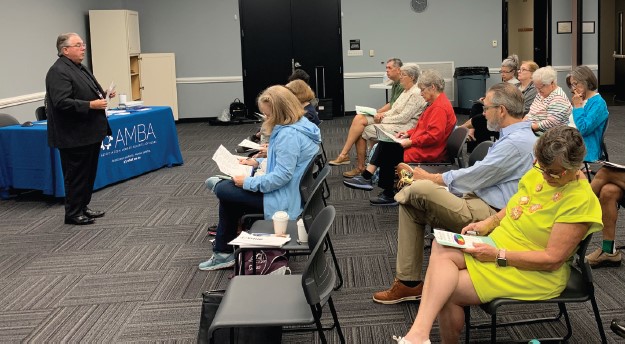
NCRGEA’s Local Outreach was back on the road in September and October, and we held seven meetings throughout the state to provide information about open enrollment. As you all know, this is a very busy and sometimes confusing time with questions about medical, dental, and vision plans. Our goal was to provide members with helpful resources they may need to navigate the process.
Our meetings included representatives from Seniors’ Health Insurance Information Program (SHIIP), Humana, and our partner, AMBA. We value these relationships and the help they provide to the retirees in our state. All who attended said they learned something beneficial and enjoyed the meetings.
Please plan to attend future events, and be on the lookout for all the ways we communicate upcoming meetings:
Online (www.rgea.info) and phone (919-834-4652) registration options
Email reminders for those who register
Our next meetings will be held in the spring of 2024 at a location near you. Check out the January edition of Living Power for dates, times, and locations, or go to our website for meeting details and how to register. You can also reach out if you have a group of state or local retirees and would like us to plan a meeting in your area. We’d be happy to arrange one!
A new state law related to the pensions of two of North Carolina’s largest health systems has stirred up controversy among stakeholders across the region.
The new law, called the Transformational Investments in NC Health, was created for UNC Health and ECU Health. UNC Health and ECU Health are the regional healthcare systems based at The University of North Carolina at Chapel Hill and East Carolina University in Greenville. Both are state agencies.
The law prohibits new employees at UNC Health and ECU Health from participating in the traditional state retirement program—a system that guarantees retired state employees an income for the rest of their lives after they retire. Instead, new employees at UNC Health and ECU Health would enroll in an investment program to save for retirement, but that program doesn’t guarantee a post-retirement lifetime income.
The Transformational Investments in NC Health law was part of the state’s 2023–2025 biennial budget, which the General Assembly approved in September. The law allocates $420 million to UNC Health and ECU Health for the NC Care initiative. The initiative is for health clinic and hospital construction and other medical services for rural areas of eastern North Carolina.
According to the office of State Senate President Pro Tem Phil Berger, some of the $420 million for NC Care is coming from the $1.6 billion “sign-on bonus” that North Carolina is getting from the federal government for expanding Medicaid health insurance to several hundred thousand uninsured lower-income North Carolinians. Funding for NC Care also comes from the State Capital and Infrastructure Fund, a fund the legislature established to pay for public infrastructure and facilities.
But State Treasurer Dale Folwell says this law threatens the stability and long-term health of the pension plan for retired state employees and future retirees. “This is a torpedo to the pension system,” he says. He believes the law also would drive up the price of providing health insurance benefits for state employees, and the costs could be transferred to the employees through their premiums or to North Carolina taxpayers.
Folwell estimated the liabilities to the pension and state health benefits systems could exceed $1.5 billion. The new law could have the collateral damage of putting increased income taxes on state employees by canceling the tax-deferred status of their retirement contributions, according to Folwell. His office oversees the state pension system and the state health plan medical insurance benefits system.
Critical Choices
The normal pension offered to state employees is the Teachers’ and State Employees’ Retirement System. But there also is an optional retirement program for employees of the University of North Carolina System, which includes all the state universities and UNC Health and ECU Health hospital systems. While the state treasurer’s office oversees the traditional pension program, the UNC System manages the optional retirement program. Employees of those health systems may participate in either retirement program.
In the Teachers’ and State Employees’ Retirement System, employees put in 6% of their salaries (and this money is tax-deferred, so it reduces the employee’s taxable income). The employing agency also contributes. The treasurer’s office invests the money, and when the employee retires, he or she will get a monthly payment based on how long they worked and the average of their highest four years of salary, a state retirement document says. Approximately 85% of a retiree’s benefits from the pension are derived from their own contributions and earnings.
“More than 90% of those who make less than $40,000 a year choose the retirement plan because it provides them with the certainty that they need when they don’t have the income to be retirement-ready on their own,” Folwell says. Among university employees earning more than $100,000, 58% choose the pension plan, and 42% choose the investment plan, says Patrick Kinlaw, the director of policy, planning, and compliance for the Retirement Systems Division at the treasurer’s office.
People who would like more control of their retirement planning can use the Optional Retirement Program, according to a guide published by the UNC System. As with the normal plan, employees put in 6% of their income (tax-deferred). Employees can direct the money to various mutual funds and other investment tools.
Folwell says the optional retirement program can be more attractive to employees with higher incomes. Regardless of whether the employees choose the standard or the optional retirement program, the state already offers all of them supplemental investment options to help increase their retirement nest eggs.
According to the Retirement Systems Division at the treasurer’s office, as of December 2022 there were 298,000 state employees contributing to the Teachers’ and State Employees’ Retirement System, and 21,000 in the UNC optional retirement program.
The treasurer’s office says that if UNC Health or ECU Health produce a new retirement program that allows employees to put in an amount other than 6% of their income (for example, 4%), the Internal Revenue Service could cancel the tax break that the employees receive on their retirement contributions.
The tax break on the retirement contribution reduces the employees’ taxable income. If an employee had a $50,000 salary, the 6% contribution is $3,000 and lowers the taxable income to $47,000.
The IRS requires the retirement contributions offered to the employees to all be the same percentage, according to the treasurer’s office. If UNC Health offers existing employees both the current 6% program plus a new 4% contribution program, the IRS could revoke the tax break for everyone.
The Big Picture
Dan Doonan of the National Institute on Retirement Security says employers in the public and private sector sometimes withdraw from their pension plans, and there are three concerns when that happens.
First, when UNC Health and ECU Health reduce their participation in the retirement system by excluding new employees, the agencies’ share of payments going into the retirement system will decline more quickly than the amount retirees drawing pensions from the plan are paid.
“What that means is, with any unfunded liabilities, there’s going to be a cost shift to the rest of the employers still in the system,” Doonan says. In this case, the other tax-funded state agencies.
Second, after the employer departs from a pension program, the risks involved in running the pension plan will be more concentrated on the remaining employers and employees. “If you have a Great Recession-type event, the employers who leave aren’t going to be there to help get things back on track,” Doonan says.
The third concern, according to Doonan, is ending up with a pension fund with more retirees and fewer workers.
“And when you look at private sector multi-employer plans that have struggled—and particularly coming out of the Great Recession—they tend to be the ones that had a lot of retirees and few workers,” he says. “Because there’s no way to get back on track if you start to get really retiree-heavy.”
When an employer or state agency exits a pension plan, it normally makes a payment to the pension plan to cover the financial liabilities it leaves behind for its employees who have been in the system.
That’s not happening with UNC Health and ECU Health, according to Folwell. “It’s a divorce where one party leaves the family and doesn’t pay the liabilities and debts they’ve left behind,” he says. Fowell estimates the health systems would have to pay more than $1 billion to make the state health plan whole, and more than $500 million to make the pension plan whole.
A study that Doonan and Tyler Bond of the National Institute on Retirement Security published in 2019 looked at what happened when pensions were shut down for state workers in several states.
When Alaska shut down its pension for state employees and teachers in 2005, it still owed pensions to workers who had already been in the system, the report found. Those costs grew into the billions. Meanwhile, after the pensions were eliminated, the state had trouble recruiting teachers, state troopers and other public employees. And people retiring without a traditional pension were more likely to suffer financial hardship.
The Alaska Beacon reported this past February that Alaska was considering reviving its pensions for state employees. It said a state study found that Alaskan government retirees relying on investment-based retirement programs were getting significantly less income than they would have if Alaska had not done away with its pensions.
Elsewhere, Michigan cut off new employees from pension eligibility in 1997. The burden on taxpayers grew to pay the retirements to the workers that had been in the system. And workers in the new, non-pension 401(k) were projected to receive only $300 per month on average, vs. $1,849 under the old pension plan, the study found.
Differing Opinions
But the two health systems say Folwell’s dire predictions for the retirement system and state health plan are wrong.
“ECU Health does not anticipate these changes will negatively impact the state of North Carolina,” ECU Health says in a statement. As of early November, details about the new retirement programs for UNC Health and ECU Health were unavailable.
In a statement to Living Power, UNC Health also defended the Transformational Investments in NC health law.
“These new benefits will mirror what other similarly sized health care systems in the state offer their employees,” says Alan Wolf, a spokesman for UNC Health. “That will allow UNC Health to better compete with the private sector on hiring and retaining employees by allowing for new retirement benefits, outside the ones normally offered by the state.”
The law also allows UNC Health to let existing employees switch to the new benefits plans, although there are no current plans to do so. “That is a new policy we could consider offering, but we are not obligated to do so,” Wolf says.
ECU Health says it “does not anticipate any impacts to existing state employees” based on its participation in the new law’s benefits programs. Of the 14,000 people at ECU Health, only 1,200 are state employees. The rest are private-sector employees operating under ECU Health and do not participate in the State Health Plan or state retirement system.
UNC Health has 30,000 people, with 13,500 state employees and 16,500 private sector employees, according to Wolf.
But NCRGEA executive director Tim O’Connell shares concern with this new law. He believes it will increase costs over time to these healthcare entities, those seeking healthcare, and even the taxpayers.
“There is some great empirical research highlighting the fact that defined benefit plans like a pension are nearly twice as efficient as defined contribution plans,” O’Connell says. “Pensions plans have distinct advantages by design with longevity pooling, portfolio diversification, and lower management fees. If these two state healthcare systems do away with the current pension and health benefits, they will either need to absorb these higher personnel costs that are then passed on to patients or reduce the employee benefits. Neither are great options.”
You may be familiar with a few personal itemized deductions to help reduce your tax bill, but maybe you’re not as familiar with “tax credits.” Here are four categories of tax credits that may help you find more than pennies under your couch cushions.
Refundable vs. nonrefundable credits Taxpayers whose tax bill is less than the amount of a refundable credit can get the difference back in their refund. However, once your liability is zero, you won’t get any leftover amount back as a refund for nonrefundable tax credits. In other words, the taxpayer gets a refund only up to the amount owed.
Earned Income Tax Credit A refundable tax credit for moderate- and low-income taxpayers with or without qualifying children is the Earned Income Tax Credit. Special rules apply to military members, clergy members, and those with disabilities. Visit the IRS’ EITC Assistant webpage to learn whether you’re eligible.
Energy efficient property credit Earn more green when you go green! This allows for a credit equal to the applicable percent of the cost of qualified property such as solar electric property, solar water heaters, geothermal heat pumps, small wind turbines, and fuel cell property. Various limitations and applicable percentages are found on the IRS’ Energy Incentives for Individuals webpage.
Electric vehicle tax credits Do you have the drive for this tax credit? You may qualify for a credit of up to $7,500 under Internal Revenue Code Section 30D if you buy a new, qualified plug-in EV or fuel cell electric vehicle (FCV). The credit is available to individuals and their businesses. To qualify, you must buy the vehicle for your own use and use it primarily in the U.S. Income restrictions apply, so check with your tax or financial professional for details.
Don’t leave money on the table! No matter your stage in life, there are ways to affect your tax bill. For more money tips, visit the You+ Money Blog at civicfcu.org.