


NCRGEA TRIVIA!


WINNERS: At the end of the 30-day contest period, one winner will be chosen from all entries. Your prize will be mailed to you, so be sure we have your correct address by completing all the information on the Trivia form.
PRIZE: All may play Trivia but only members of NCRGEA will be eligible to win the cash prize.
CLICK HERE to play Trivia!
Communications Committee
Zoom link here:
Passcode: MR4H8%Sp[/et_pb_text][/et_pb_column][/et_pb_row][/et_pb_section]
Technology Committee
Transcription:
https://us02web.zoom.us/rec/share/lehEA5FOBVPt6USEHoqr0FRyxmuRdywb4LfOR1UQ6gBdIFIg4YEkc4xXmpP91W_1._aGiROawtdbDjZV7
Passcode: gpFbY8+A
Recording:
Passcode: gpFbY8+
NCRGEA Government Relations Update #21-28

Legislators are conferencing this week, meeting behind closed doors to hammer out a compromised budget between the House and the Senate.
- Right now, House legislators have a 2 percent bonus for state retirees in its budget.
- Right now, House Bill 469—authorizing a 2 percent bonus for local government retirees, remains stuck in the House Pensions Committee.
- Right now, it’s time to make your voice heard.
Visit House & Senate Conferees for S 105 – Appropriations Act 2021-2023 to find contact information for the budget conferees, including email and phone. Tell the budget conferees and your legislators that you and all retired public servants need an inflation abating cost of living adjustment.
As always, thank you for the many contributions you gave to make our communities and state safe, prosperous, and healthy. We are proud to serve you and our whole retiree family.
Supreme Court to Hear Lake Case October 4, 2021
After several procedural motions from both sides and orders from the Supreme Court, that Court eventually issued an order last week that the case would be heard by the Court at oral argument. On Friday, the Court set the case to be heard at oral argument on Monday October 4 at 3:00 PM in the Supreme Court at 2 East Morgan Street in Raleigh.
The Court will consider the retirees’ argument that the Court of Appeals was incorrect in reversing the Superior Court’s ruling in favor of the retirees. The arguments can be viewed on October 4th at 3:00 pm at http://govu.us/supreme-court-of-nc-oral-arguments
Here is the history of the Lake, et al. v State Health Plan, et al. to put the latest developments in context. In 2011, the General Assembly amended the State Health Plan to require retirees to contribute a premium to receive benefits under the 80/20 plan. Believing that the State had promised 80/20 benefits in a contractual fashion, over 30 retirees sued the State Health Plan and others in 2012 in Superior Court in Gaston
County. The Superior Court Judge certified the case as a class action and ruled in 2017 that the retirees were entitled to win the case. The Judge’s order provided that damages would be determined after receiving expert testimony.
The State appealed the trial court’s order to the Court of Appeals. In an opinion issued in 2019, a three-judge panel of the Court of Appeals unanimously ruled that the trial court had erred and ordered the case back to Superior Court to be dismissed. Plaintiff retirees petitioned the Supreme Court to grant discretionary review of the Court of Appeals decision.
Stay Tuned!!
Richard Rogers
NCRGEA Executive Director

NAEP is Hiring – Assessment Administrators Needed


Assessment Administrators Needed
Seeking motivated individuals to proctor in-school assessment sessions with fourth- and eighth-grade students for the National Assessment of Educational Progress. Must be available to work the specified data collection period of January 24 to March 4, 2022. Paid training, paid time, and mileage reimbursement for local driving, and weekly paychecks. This is a part-time, temporary position. For more information, visit http://www.WorkNAEP.com and provide your name and email. We will contact you with a link to our online application when it is available. Online applications will be accepted beginning in July 2021. Questions? Email: NAEPrecruit@westat.com.
Protecting the health and safety of our employees and survey participants is a top priority for Westat. Based on recommendations from the CDC and other public health authorities, we require staff to protect and monitor their health while working on their assignment. The use of personal protective equipment, regular testing for COVID-19, or other screening activities is required; getting vaccinated is strongly recommended and may be required in some locations.
The data collection window may be extended due to weather or other delays.
WESTAT
EOE, including disability/veterans
Protecting Public-Service Retirees’ Pension Plan a Priority

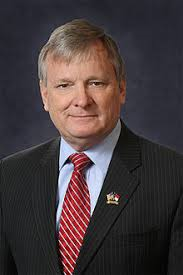
By N.C. Treasurer Dale R. Folwell, CPA
One of the things I enjoy the most about my job as keeper of the public purse is the opportunity to meet retired public-service employees whose years of hard work provide the backbone of our state and local governments. Their dedicated service might have been unheralded, but it hasn’t gone unnoticed.
That’s why I take my obligation to preserve and protect the state pension plan for this and future generations very seriously. North Carolina Retired Governmental Employees Association members and other public-service retirees deserve no less in their Golden Years.
So I’m pleased to tell you about recent landmark changes to the state and local government pension systems designed to eliminate $18.4 billion in unfunded liabilities over the next 12 years. These essential and long-overdue steps will ensure we have enough money in the pension plan to cover the monthly retirement checks we have promised to deliver without fail.
The governing boards of the Teachers’ and State Employees’ Retirement System and the Local Governmental Employees’ Retirement System voted unanimously on Thursday, Jan. 28, to reduce the assumed rate of return on investments from 7% annually to 6.5%, which more accurately reflects actual earnings.
What is important to know is that when the assumed rate of return is set higher than the earnings that are achieved, the deficit increases between pension plan assets and what is needed to pay future retiree benefits.
It is particularly critical to narrow that gap now because people are retiring earlier and living longer, in many cases being retired longer than they actually worked. Retirees collecting from the pension system now outnumber the active employees paying into the plan. That puts additional pressure on fulfilling payment obligations.
You might be shocked to learn that the unrealistically high rate of return assumption hasn’t been achieved on average for the past 20 years. Lowering that goal to a more realistic expectation is part of my administration’s transparent strategy to eliminate unfunded liabilities — that gap between assets available and promises made.
At present the pension plan has more than $118 billion in assets, making it the ninth largest pool of public money in the country and one of the best funded despite having $18 billion in unfunded liabilities we’re working hard to wipe out.
Meanwhile, many public pension plans are fragile or distressed. Some estimates show they have accumulated a $1.55 trillion funding shortfall in 2020. Their average funded ratio is just 69.4%, with some much worse, compared to North Carolina’s 87.4% funded level.
Because funded status reflects the solvency of a pension fund, you can see that our pension plan is in very good shape compared to most. I don’t intend to see that status erode on my watch. That’s why I led the effort to lower the assumed rate of investment return three times since I have taken office. I am only the second treasurer to reduce the rate in more than 60 years.
Lowering rates of return has now become a national trend, and we are in the forefront. One recent study shows more than 50% of pension plans reduced their investment return assumption since fiscal year 2018.
Lowering the projection on investment earnings will require state and local government contributions to the pension plan to be higher than they would have otherwise been. But not lowering the assumed rate of return only kicks the can down the road, costing taxpayers more in the long run. So, government employers are in a situation where they either make increased contributions now or pay even more later because the unfunded liabilities will continue increasing.
At the Department of State Treasurer we are committed to taking strong and necessary action now so we will be able to continue delivering $554 million a month in richly deserved pension checks to more than 950,000 teachers, state and local government employees, firefighters, police officers and other public workers who are members of the N.C. Retirement Systems.