


NCRGEA announces partnership with AMBA to provide more benefits to members.


The North Carolina Retired Governmental Employees’ Association (NCRGEA) is pleased to announce that it has partnered with Association Member Benefits Advisors (AMBA) to provide members with more benefit opportunities. Our goal is to provide all members access to the supplemental benefits they need to fully secure and enjoy their retirement while working to attract more members and strengthen the collective voice of NCRGEA at the General Assembly.
With nearly 40 years of experience and more than 80 partner associations across the country, AMBA is a nationwide company with expertise in meeting the needs of active and retired public sector employees. AMBA specializes in analyzing retirement benefits, identifying any gaps in coverage, and negotiating with a wide variety of A-rated insurance carriers.
In the coming weeks and months, AMBA will send information directly to NCRGEA members, so watch your mailboxes and your email inboxes for these and other announcements about our new partnership:
-
- A comprehensive yet tailored menu of benefits available exclusively to NCRGEA members.
- New educational services for members, including free individual benefit reviews by licensed professional representatives committed to serving the best interests of NCRGEA members.
- Webinars and seminars conducted across the state by NCRGEA and AMBA, to educate members on a wide variety of topics and to provide more opportunities for members to get together, renew acquaintances, meet new friends with similar backgrounds and experiences, and simply have fun!


U.S. Supreme Court Response Date on Lake Case Approaching

We know that many members of the Association remain interested in the Lake Case and its related current developments.
Here is a condensed history of the case: In 2011, the General Assembly reduced the standard health plan for State retirees from a noncontributory 80/20 plan to a 70/30. Twenty-eight retirees, led by former Supreme Court Chief Justice I. Beverly Lake, Jr., filed suit in 2012 to preserve and protect state retirees’ health care benefits.
Over the last ten years, the State of North Carolina asserted a variety of procedural and substantive defenses to test the merits of the case. In 2016, the Superior Court Judge presiding over the case certified the case as a class action, affecting some 220,000 state retirees who had vested benefits as of 2011.
The Superior Court Judge ruled that the plaintiff retirees were entitled to judgment against the State. The Judge’s Order specified that damages would be assessed after hearing expert witness evidence.
The State appealed, and a cumbersome appellate process ensued. In October of 2021, the case finally was heard in the North Carolina Supreme Court for a decision on the merits of the case. On March 11 of this year, the Supreme Court held that state retirees do have enforceable contract rights. The Court held that each retiree in the
class is entitled for life to the noncontributory health care benefits offered by the state at the time that retiree vested in retirement health care benefits. Those benefits are a part of that retiree’s contract with the State.
The Supreme Court sent the case back to the Superior Court for a determination of how much in damages each retiree should receive. In other words, what are the extra costs each incurred as a result of the 2011 action of the General Assembly?
Each side will hire experts, actuaries, to determine what those damages are and present evidence to the Superior Court. It will take several months for any more specific information to be available from the Superior Court. It should be stressed that this case covers only State government retirees, not local government.
On June 9, 2022, the State of North Carolina filed a petition for Writ of Certiorari with the United States Supreme Court requesting that the U. S. Supreme Court consider an appeal of the North Carolina Supreme Court’s decision. The Plaintiffs’ response is due on August 15, 2022.
NCRGEA Visits Humana Neighborhood Center in Garner, NC
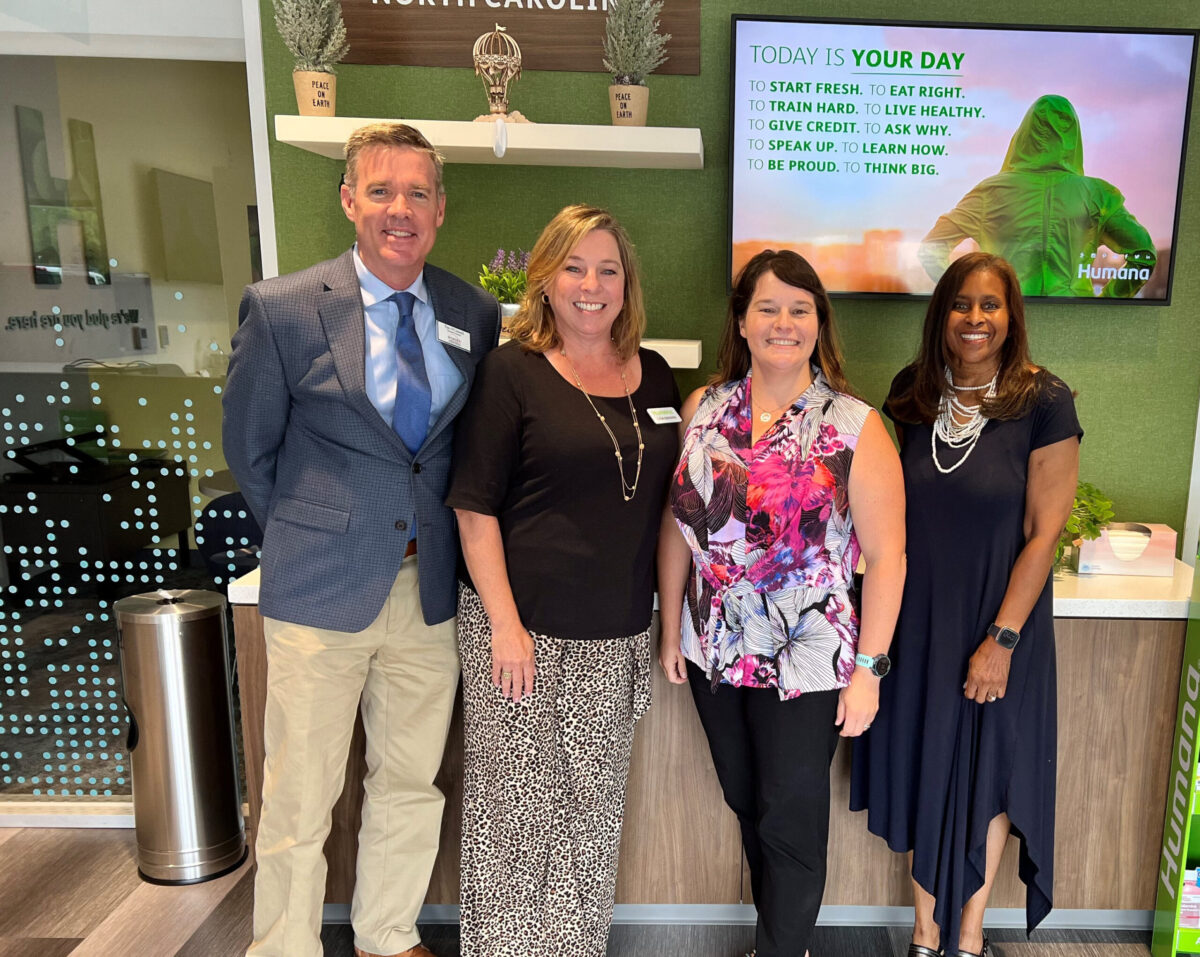
On July 15, 2022, NCRGEA enjoyed learning about resources available at Humana Neighborhood Centers to State Health Plan Medicare participants. In the photo from left to right are Tim O’Connell, NCRGEA Executive Director; Lisa Nannini, Humana; Nichole Arnott, Humana; and Deryl Fulmer, NCRGEA Community Liaison.
For more information on the neighborhood centers, visit https://www.humananeighborhoodcenter.com/.
There’s Still Time: NCRGEA Trivia for July


Don’t forget to participate in this month’s Trivia for a chance to win a prize. To enter, use the July form link.
North Carolina Retirement Systems Experiencing High Volume of Calls

Due to an increased number of phone calls this month, North Carolina Retirement Systems requests NCRGEA members and any other contacts to use the “Callback assist” option offered immediately after the anticipated hold-time message.
The Callback option keeps the member’s call back request in the queue — and the call will be returned when that slot comes up in the order in which it was received. Most issues, such as EFT bank change, tax withholding, addresses, beneficiaries, etc., can be changed by the member in their ORBIT account, eliminating a need to call altogether.
NC Retirement Systems expects the issue to be resolved in a couple of weeks.
2022 State Budget Signed by Governor Roy Cooper
Governor Roy Cooper signed the state 2022 budget Monday, July 11, one day before it would become law without his signature. The $27.9 billion budget provides pay increases for teachers, state government workers, and raises per hour wages for non-salaried state workers. The budget also provides an additional 1 percent state retiree bonus to an already appropriated 3 percent bonus that will hit bank accounts and mailboxes in October.
While legislative leadership and the governor worked together more closely than any other year in Cooper’s tenure, the session did not come without hiccups. Two of the anticipated larger pieces of legislation expected to see light in this year’s summer short session, Medicaid expansion and medical marijuana, hit obstacles that sent lawmakers home without resolution.
Although these major efforts may be postponed for now, legislative leadership praised the budget as both bipartisan and fiscally responsible.
“I’m pleased to see the governor finally signed the budget,” Sen. Joyce Krawiac (R—Forsyth) said. The healthcare, DHHS appropriations, and pensions chairwoman added, “This is a fiscally responsible budget that had bipartisan support. It continues the sensible spending that has guided our state for more than a decade.”
In December 2021, state retirees received a 2 percent bonus. In October 2022, retirees will receive a 4 percent bonus, totaling 6 percent in all for the 2021-2022 biennium. The Local Government Retirement Board of Trustees approved a 2 percent bonus in January that will reach local retirees this October.
The budget also provides ample rainy day fund increases to abate inflation, additional mental health support for public schools, and a substantial increase in public works funding for rural areas.
House Speaker Tim Moore issued a statement regarding the governor’s signature.
“We are pleased Gov. Cooper signed this responsible spending plan into law. Moving forward, we are committed to working together to improve healthcare, access and expand Medicaid, while providing the necessary safeguards to preserve the state’s fiscal health,” Moore said.